The genetics of twin studies have a bias showing more heredity than in reality, owing to a statistical artifact. The twin studies for heredity are based on comparing the correlation between 2 identical twins minus that between 2 fraternal ones (assumed to be sharing half their genes). The use of fraternal twins as control is assumed to extract the “environmental” factors. Problem: Correlation is conditional and psychologists think it is unconditional. We show how the math is entirely different. The core error is that genes and environment are not separable and additive.
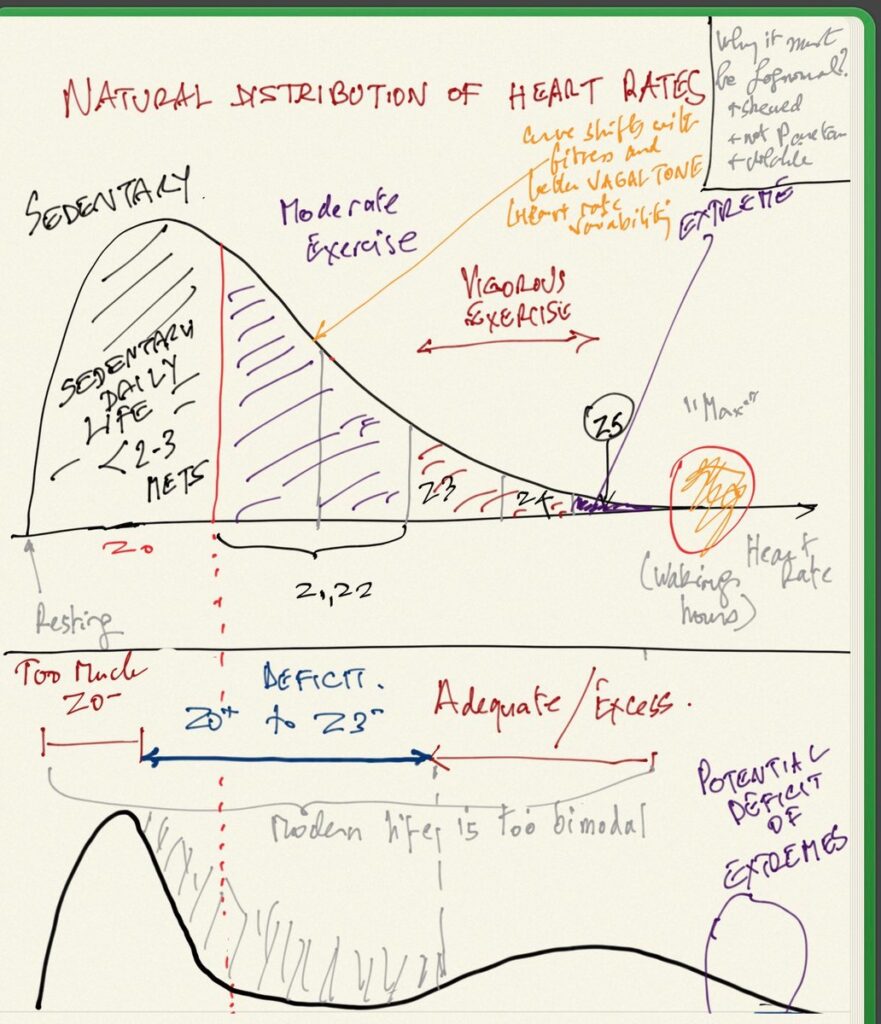
Natural distribution of heart rates vs that from modern life.
Heart rates must be Lognormal in distribution. Simply, it is not possible to have a negative heart rate and at low variance (and a mean > 6 standard deviations away from 0), the lognormal behaves like a normal.
Incidentally I failed to understand from San-Millan’s paper(s) the 2 mmol lactate threshold claimed in the podcast with Petter Attia and elsewhere. I don’t see a threshold. Even for athletes (top graph below) there is a mix outside asymptote (Lactate >5 mmol becomes 0 fat oxidation).
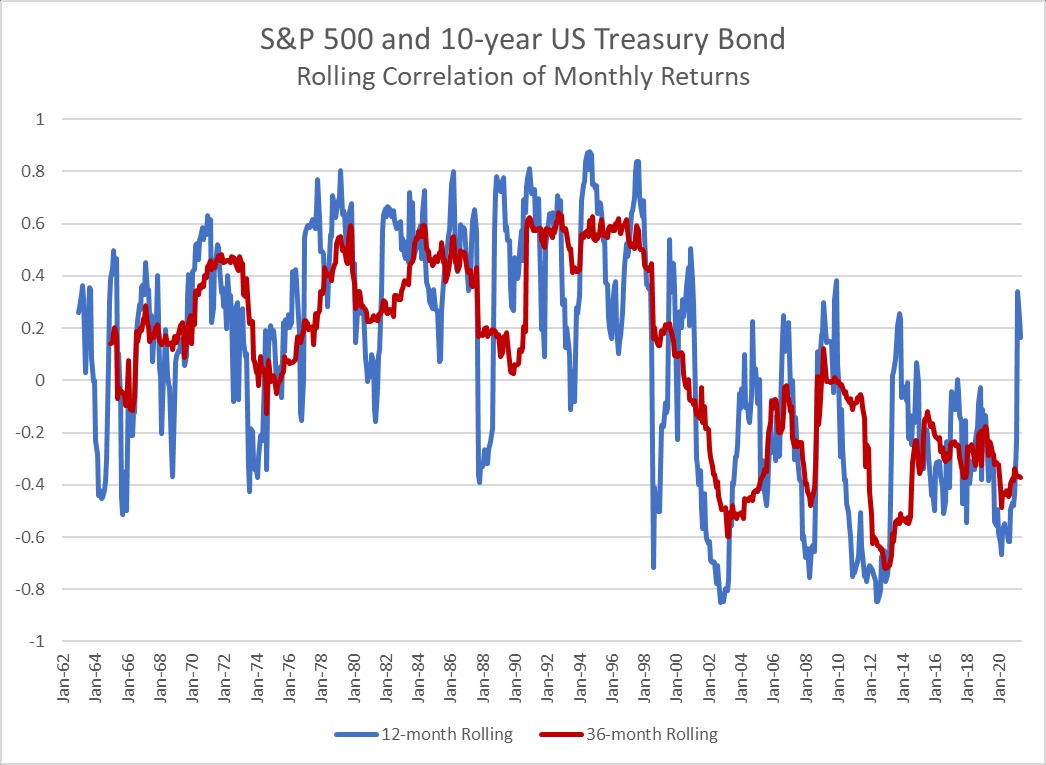
Financial theory requires correlation to be constant (or, at least, known and nonrandom). Nonrandom means predictable with waning sampling error over the period concerned. Ellipticality is a condition more necessary than thin tails, recall my Twitter fight with that non-probabilist Clifford Asness where I questioned not just his empirical claims and his real-life record, but his own theoretical rigor and the use by that idiot Antti Ilmanen of cartoon models to prove a point about tail hedging. Their entire business reposes on that ghost model of correlation-diversification from modern portfolio theory. The fight was interesting sociologically, but not technically. What is interesting technically is the thingy below.
When someone tells you it was a 10 sigma event, meaning it is 10 standard deviations and it is Gaussian; unless the information came from God, you can reject the Gaussian distribution for that domain. We show the derivations.
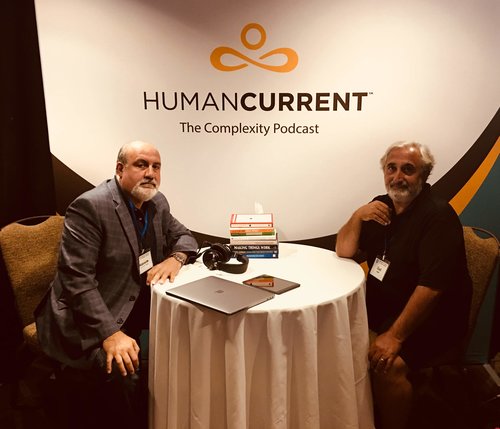
HumanCurrent The Complexity Podcast
Episode 102 Probability & Adaptation
An Interview With Gad Saad & Nassim Nicholas Taleb
August 30, 2018
In this episode, Haley and Angie introduce a special conversation between Gad Saad and Nassim Nicholas Taleb at the Ninth International Conference on Complex Systems (ICCS). Gad Saad is an evolutionary behavioral scientist and Marketing professor at Concordia University and Nassim Nicholas Taleb is a best-selling author, probability researcher and former trader. During their quick and informal conversation, Gad and Nassim share details from their joint presentation at ICCS and share some friendly remarks about each other’s research.
Nassim will be a featured presenter at the New England Complex Systems Institute’s five day certificate program in Complexity and Data Analytics, Risk & Opportunity, and Implications for Strategy and Policy from May 1-5, 2017, in Washington, D.C. Please visit the site for more details.
Let us take the idea of the last chapter [the intransigent minority’s disproportional influence] one step further, get a bit more technical, and generalize. It will debunk some of the fallacies we hear in psychology, “evolutionary theory”, game theory, behavioral economics, neuroscience, and similar fields not subjected to proper logical (and mathematical) rigor, in spite of the occasional semi-complicated equations. For instance we will see why behavioral economics will necessarily fail us even if its results were true at the individual level and why use of brain science to explain behavior has been no more than great marketing for scientific papers.
Consider the following as a rule. Whenever you have nonlinearity, the average doesn’t matter anymore. Hence:
The more nonlinearity in the response, the less informational the average.
For instance, your benefit from drinking water would be linear if ten glasses of water were ten times as good as one single glass. If that is not the case, then necessarily the average water consumption matters less than something else that we will call “unevenness”, or volatility, or inequality in consumption. Say your average daily consumption needs to be one liter a day and I gave you ten liters one day and none for the remaining nine days, for an average of one liter a day. Odds are you won’t survive. You want your quantity of water to be as evenly distributed as possible. Within the day, you do not need to consume the same amount water every minute, but at the scale of the day, you want maximal evenness.
The effect of the nonlinearity in the response on the average –and the informational value of such an average –is something I’ve explained in some depth in Antifragile, as it was the theme of the book, so I will just assume a summary here is sufficient. From an informational standpoint, someone who tells you “We will supply you with 0ne liter of water liter day on average” is not conveying much information at all; there needs to be a second dimension, the variations around such an average. You are quite certain that you will die of thirst if his average comes from a cluster of a hundred liters every hundred days.
Note that an average and a sum are mathematically the same thing up to a simple division by a constant, so the fallacy of the average translate into the fallacy of summing, or aggregating, or looking at collective that has many components from the properties of a single unit.
As we saw, complex systems are characterized by the interactions between their components, and the resulting properties of the ensemble not (easily) seen from the parts.
There is a rich apparatus to study interactions originating from what is called the Ising problem, after the physicist Ernst Ising, originally in the ferromagnetic domain, but that has been adapted to many other areas. The model consists of discrete variables that represent atoms that can be in one of two states called “spins” but are in fact representing whether the state is what is nicknamed “up” or “down” (or can be dealt with using +1 or −1). The atoms are arranged in a lattice, allowing each unit to interact with its neighbors. In low dimensions, that is that for every atom you look at an interaction on a line (one dimensional) between two neighbors one to its left and one to its right, on a grid (two dimensional), the Ising model is simple and lend itself to simple solutions.
One method in such situations called “mean field” is to generalize from the “mean”, that is average interaction and apply to the ensemble. This is possible if and only if there is no dependence between one interaction and another –the procedure appears to be the opposite of renormalization from the last chapter. And, of course, this type of averaging is not possible if there are nonlinearities in the effect of the interactions.
More generally, the Übererror is to apply the “mean field” technique, by looking at the average and applying a function to it, instead of averaging the functions –a violation of Jensen’s inequality [Jensen’s Inequality, definition: a function of an average is not an average of a function, and the difference increases with disorder]. Distortions from mean field techniques will necessarily occur in the presence of nonlinearities.
What I am saying may appear to be complicated here –but it was not so with the story of the average water consumption. So let us produce equivalent simplifications across things that do not average.
From the last chapter [Minority Rule],
The average dietary preferences of the population will not allow us to understand the dietary preferences of the whole.
Some scientist observing the absence of peanuts in U.S. schools would infer that the average student is allergic to peanuts when only a very small percentage are so.
Or, more bothersome
The average behavior of the market participant will not allow us to understand the general behavior of the market.
These points appear clear thanks to our discussion about renormalization. They may cancel some stuff you know. But to show how under complexity the entire field of social science may fall apart, take one step further,
The psychological experiments on individuals showing “biases” do not allow us to understand aggregates or collective behavior, nor do they enlighten us about the behavior of groups.
Human nature is not defined outside of transactions involving other humans. Remember that we do not live alone, but in packs and almost nothing of relevance concerns a person in isolation –which is what is typically done in laboratory-style work.
Some “biases” deemed “irrational” by psycholophasters interested in pathologizing humans are not necessarily so if you look at their effect on the collective.
What I just said explains the failure of the so-called field of behavioral economics to give us any more information than orthodox economics (itself rather poor) on how to play the market or understand the economy, or generate policy.
But, going further, there is this thing called, or as Fat Tony would say, this ting called game theory that hasn’t done much for us other than produce loads of verbiage. Why?
The average interaction as studied in game theory insofar as it reveals individual behavior does not allow us to generalize across preferences and behavior of groups.
Groups are units on their own. There are qualitative differences between a group of ten and a group of, say 395,435. Each is a different animal, in the literal sense, as different as a book is from an office building. When we focus on commonalities, we get confused, but, at a certain scale, things become different. Mathematically different. The higher the dimension, in other words the number of possible interactions, the more difficult to understand the macro from the micro, the general from the units.
Or, in spite of the huge excitement about our ability to see into the brain using the so-called field of neuroscience:
Understanding how the subparts of the brain (say, neurons) work will never allow us to understand how the brain works.
So far we have no f***g idea how the brain of the worm C elegans works, which has around three hundred neurons. C elegans was the first living unit to have its gene sequenced. Now consider that the human brain has about one hundred billion neurons. and that going from 300 to 301 neurons may double the complexity. [I have actually found situations where a single additional dimension may more than double some aspect of the complexity, say going from a 1000 to 1001 may cause complexity to be multiplied by a billion times.] So use of never here is appropriate. And if you also want to understand why, in spite of the trumpeted “advances” in sequencing the DNA, we are largely unable to get information except in small isolated pockets of some diseases.
Understanding the genetic make-up of a unit will never allow us to understand the behavior of the unit itself.
A reminder that what I am writing here isn’t an opinion. It is a straightforward mathematical property.
I cannot resist this:
Much of the local research in experimental biology, in spite of its seemingly “scientific” and evidentiary attributes fail a simple test of mathematical rigor.
This means we need to be careful of what conclusions we can and cannot make about what we see, no matter how locally robust it seems. It is impossible, because of the curse of dimensionality, to produce information about a complex system from the reduction of conventional experimental methods in science. Impossible.
My colleague Bar Yam has applied the failure of mean-field to evolutionary theory of the selfish-gene narrative trumpeted by such aggressive journalists as Richard Dawkins and Steven Pinker and other naive celebrities with more mastery of English than probability theory. He shows that local properties fail, for simple geographical reasons, hence if there is such a thing as a selfish gene, it may not be the one they are talking about. We have addressed the flaws of “selfishness” of a gene as shown mathematically by Nowak and his colleagues.
Hayek, who had a deep understanding of the properties of complex systems, promoted the idea of “scientism” to debunk statements that are nonsense dressed up as science, used by its practitioners to get power, money, friends, decorations, invitations to dinner with the Norwegian minister of culture, use of the VIP transit lounge at Kazan Airport, and similar perks. It is easier to take a faker seriously, since science doesn’t look neat and cosmetically appealing. So with the growth of science, we will see a rise of scientism, and my general heuristics are as follows: 1) look for the presence of simple nonlinearity, hence Jensen’s Inequality. If there is such nonlinearity, then call Yaneer Bar Yam at the New England Complex Systems Institute for a friendly conversation about the solidity of the results ; 2) If the paper writers use anything that remotely looks like a “regression” and “p-values”, ignore the quantitative results.
On Medium, Nassim explains how once an intransigent minority reaches a tiny percentage of the total population, the majority of the population will naturally succumb to their preferences:
The best example I know that gives insights into the functioning of a complex system is with the following situation. It suffices for an intransigent minority –a certain type of intransigent minorities –to reach a minutely small level, say three or four percent of the total population, for the entire population to have to submit to their preferences. Further, an optical illusion comes with the dominance of the minority: a naive observer would be under the impression that the choices and preferences are those of the majority. If it seems absurd, it is because our scientific intuitions aren’t calibrated for that (fughedabout scientific and academic intuitions and snap judgments; they don’t work and your standard intellectualization fails with complex systems, though not your grandmothers’ wisdom).
The main idea behind complex systems is that the ensemble behaves in ways not predicted by the components. The interactions matter more than the nature of the units. Studying individual ants will never (one can safely say never for most such situations), never give us an idea on how the ant colony operates. For that, one needs to understand an ant colony as an ant colony, no less, no more, not a collection of ants. This is called an “emergent” property of the whole, by which parts and whole differ because what matters is the interactions between such parts. And interactions can obey very simple rules. The rule we discuss in this chapter is the minority rule.
The minority rule will show us how it all it takes is a small number of intolerant virtuous people with skin in the game, in the form of courage, for society to function properly.
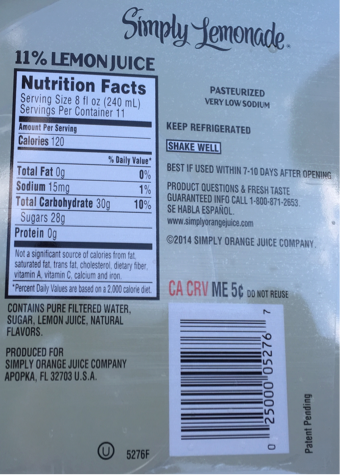
This example of complexity hit me, ironically, as I was attending the New England Complex Systems institute summer barbecue. As the hosts were setting up the table and unpacking the drinks, a friend who was observant and only ate Kosher dropped by to say hello. I offered him a glass of that type of yellow sugared water with citric acid people sometimes call lemonade, almost certain that he would reject it owing to his dietary laws. He didn’t. He drank the liquid called lemonade, and another Kosher person commented: “liquids around here are Kosher”. We looked at the carton container. There was a fine print: a tiny symbol, a U inside a circle, indicating that it was Kosher. The symbol will be detected by those who need to know and look for the minuscule print. As to others, like myself, I had been speaking prose all these years without knowing, drinking Kosher liquids without knowing they were Kosher liquids.
Figure 1 The lemonade container with the circled U indicating it is (literally) Kosher.
Criminals With Peanut Allergies
A strange idea hit me. The Kosher population represents less than three tenth of a percent of the residents of the United States. Yet, it appears that almost all drinks are Kosher. Why? Simply because going full Kosher allows the producer, grocer, restaurant, to not have to distinguish between Kosher and nonkosher for liquids, with special markers, separate aisles, separate inventories, different stocking sub-facilities. And the simple rule that changes the total is as follows:
A Kosher (or halal) eater will never eat nonkosher (or nonhalal) food , but a nonkosher eater isn’t banned from eating kosher.
Or, rephrased in another domain:
A disabled person will not use the regular bathroom but a nondisabled person will use the bathroom for disabled people.
Granted, sometimes, in practice, we hesitate to use the bathroom with the disabled sign on it owing to some confusion –mistaking the rule for the one for parking cars, under the belief that the bathroom is reserved for exclusive use by the handicapped.
Someone with a peanut allergy will not eat products that touch peanuts but a person without such allergy can eat items without peanut traces in them.
Which explains why it is so hard to find peanuts on airplanes and why schools are peanut-free (which, in a way, increases the number of persons with peanut allergies as reduced exposure is one of the causes behind such allergies).
Let us apply the rule to domains where it can get entertaining:
An honest person will never commit criminal acts but a criminal will readily engage in legal acts.
Let us call such minority an intransigent group, and the majority a flexible one. And the rule is an asymmetry in choices.
I once pulled a prank on a friend. Years ago when Big Tobacco were hiding and repressing the evidence of harm from secondary smoking, New York had smoking and nonsmoking sections in restaurants (even airplanes had, absurdly, a smoking section). I once went to lunch with a friend visiting from Europe: the restaurant only had availability in the smoking sections. I convinced the friend that we needed to buy cigarettes as we had to smoke in the smoking section. He complied.