(Background. The Black Swan explains the domain-dependence of expertise: why the electrician, dentist, are experts, while the journalist, State Department bureaucrat, and macroeconomist are not. Since then, there has been a global movement against the pseudo-expert, the serial incompetence of a certain class of babbling and pompous operatives across bureaucrato-academic professions. Which leads to the question: who is the real expert? Who decides on who is and who is not expert? Where is the metaexpert? Time it is. Or, rather, Lindy.)
Lindy is a deli in New York, now a tourist trap, that proudly claims to be famous for its cheesecake, but in fact has been known for the fifty or so years of interpretation by physicists and mathematicians of the heuristic that developed there. Actors who hung out there gossiping about other actors discovered that Broadway shows that lasted, say one hundred days, had a future life expectancy of a hundred more. For those that lasted two hundred days, two hundred more. The heuristic became known as the Lindy Effect.
Click through to read the rest of the post on Medium.
The first is the inequality people tolerate, such as one’s understanding compared to that of people deemed heroes, say Einstein, Michelangelo, or the recluse mathematician Grisha Perelman, in comparison to whom one has no difficulty acknowledging a large surplus. This applies to entrepreneurs, artists, soldiers, heroes, the singer Bob Dylan, Socrates, the current local celebrity chef, some Roman Emperor of good repute, say Marcus Aurelius; in short those for whom one can naturally be a “fan”. You may like to imitate them, you may aspire to be like them; but you don’t resent them.
The second is the inequality people find intolerable because the subject appears to be just a person like you, except that he has been playing the system, and getting himself into rent seeking, acquiring privileges that are not warranted –and although he has something you would not mind having (which may include his Russian girlfriend), he is exactly the type of whom you cannot possibly become a fan. The latter category includes bankers, bureaucrats who get rich, former senators shilling for the evil firm Monsanto, clean-shaven chief executives who wear ties, and talking heads on television making outsized bonuses. You don’t just envy them; you take umbrage at their fame, and the sight of their expensive or even semi-expensive car trigger some feeling of bitterness. They make you feel smaller.
Click through to read the rest of this post on Medium.
Nassim will present his first medical paper on antifragility on Monday, November 28 at the University of Pennsylvania School of Medicine. On Facebook, Nassim says that this is “basically, a more technical version of the book Antifragile.” He also adds “Note that this is not making any standalone empirical point, rather gluing various phenomena under the convexity argument, with necessary connections (if… then necessarily).”
Ed Thorp memoirs read like a thriller –mixing wearable computers that would have made James Bond proud, shady characters, great scientists and poisoning attempts (in addition to the sabotage of Ed’s car so he would have an “accident” in the desert). The book will reveal a thorough, rigorous, methodical person in search of life, knowledge, financial security, and, not least, fun. Thorp is also known to a generous man, intellectually speaking, eager to share his discoveries with random strangers (in print but also in person) –something you would hope to find in a scientist but usually don’t. But he is humble –he would qualify as the only humble trader on planet Earth –so, unless the readers can reinterpret what’s between the lines, they won’t notice that his contribution is vastly more momentous than he reveals. Why?
Because of its simplicity. Its sheer simplicity.
For it is the straightforward character of his contributions and insights that made it both invisible in academia and useful for practitioners. My purpose here is not to explain or summarize the book. Thorp –not surprisingly –writes in a direct, clear, and engaging way; I am here, as a trader and a practitioner of mathematical finance, to show its importance and put it in context for my community of real world scientists-traders and risk takers in general.
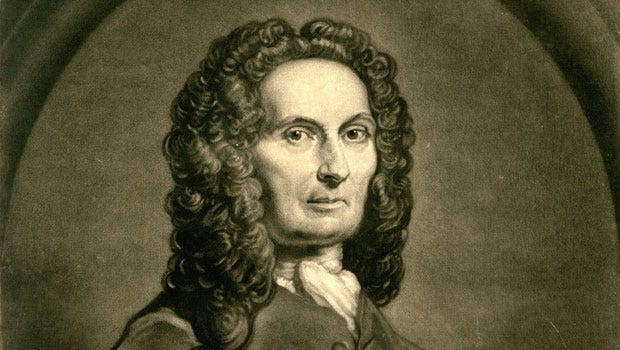
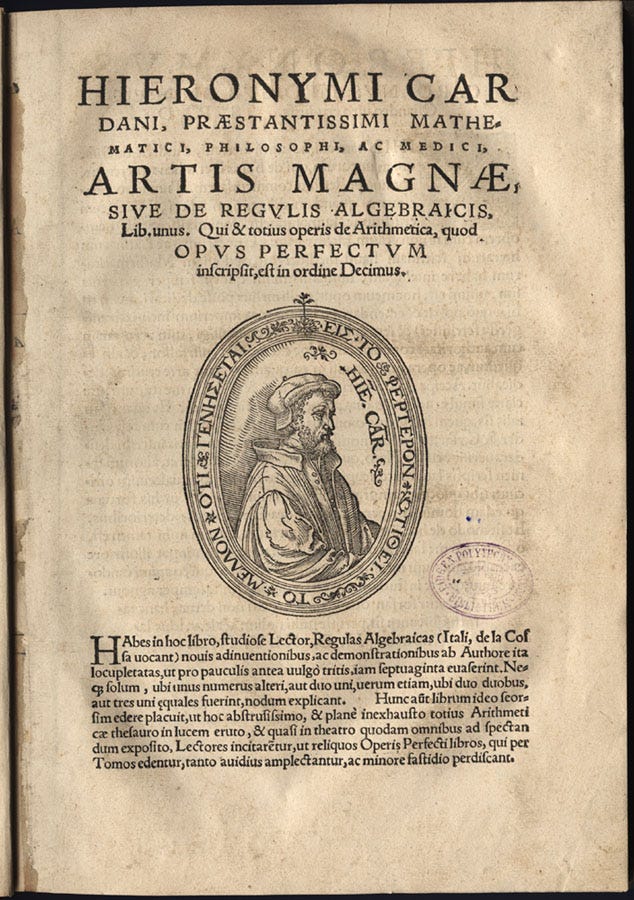
The context is as follows. Ed Thorp is the first modern mathematician who successfully used quantitative methods for risk taking –and most certainly the first mathematician who met financial success doing it. Since then there have been a cohort, such as the Stony Brook whiz kids –but Thorp is their dean. His main and most colorful predecessor, Girolamo (sometimes Geronimo) Cardano, a sixteenth Century polymath and mathematician who –sort of –wrote the first version of Beat the Dealer, was a compulsive gambler. To put it mildly, he was unsuccessful at it –not least because addicts are bad risk takers, and, to be convinced, just take a look at the magnificence of Monte Carlo, Las Vegas, and Biarritz, places financed by their compulsion. Cardano’s book, Liber de ludo aleae (“Book on Games of Chance”) was instrumental in the later development of probability, but, unlike Thorp, was less of an inspiration for gamblers and more of one for mathematicians. Another mathematician, a French Protestant refugee in London, Abraham de Moivre, a frequenter of gambling joints and author of The doctrine of chances: or, a method for calculating the probabilities of events in play (1718) could hardly make both ends meet. One can count another half a dozen mathematician-gamblers, in a line that include the great Fermat, Huygens — who were either indifferent to the bottom line or (for those who weren’t) not particularly good at it. Before Ed Thorpe, mathematicians of gambling had their love of chance largely unrequited.
Thorp’s method is as follows. He cuts to the chase in identifying a clear edge (that is something that in the long run puts the odds in his favor). The edge has to be obvious and uncomplicated. For instance, calculating the roulette momentum with the first wearable computer (with no less of a co-conspirator than the great Claude Shannon, father of information theory), he estimated a typical edge of roughly 40% per bet. But that part is easy, very easy. It is capturing the edge, converting it into dollars in the bank, restaurant meals, interesting cruises, and Christmas gifts to friends and family; that’s the hard part. It is the dosage of your betting –not too little, not too much –that in the end matters. For that, Ed did great work on his own, before the theoretical refinement that came from a third member of the Information Trio: John Kelly, of the Kelly criterion, which we discuss today because of Ed Thorp made it operational.
A bit more about the simplicity before we discuss the dosing. For an academic judged by his colleagues, rather than the bank manager of his local branch (or his tax accountant), a mountain giving birth to a mouse, after huge labor, is not a very good thing. They prefer the mouse to give birth to a mountain; it is the perception of sophistication that matters. The more complicated, the better; the simple doesn’t get you citations, H-values or some such metric du jour that brings the respect of the university administrators as they can understand that stuff but not the substance of the real work. The only academics who escape the burden of complication-for-complication’s sake are the great mathematicians and physicists (and from what I hear this is becoming harder and harder in today’s funding and ranking environment).
Ed was initially an academic, but he favored learning by doing, with his skin in the game. When you reincarnate as practitioner, you want the mountain to give birth to the simplest possible strategy, and one that has the smallest amount of side effects, the minimum possible hidden complications. The genius of Ed is demonstrated in the way he came up with very simple rules in Black Jack. Instead of engaging in complicated combinatorics and memory–challenging card counting (something that requires one to be a savant), he crystallizes all his sophisticated research into simple rules. Go to a Black Jack table. Keep a tally. Start with zero. Add one for some strong cards, minus ones for weak ones, and nothing for others. It is easy to just increment up and down mentally, bet larger when the number is high, smaller when it is low, and such a strategy is immediately applicable by anyone with the ability to tie his shoes or find a casino on a map. Even while using wearable computers at the roulette table, the detection of edge was simple, so simple that one can get it while standing on a balance ball in the gym; the fanciness resides in the implementation and the wiring.
As a side plot, Ed discovered what is known today as the Black Scholes option formula, before Black and Scholes (and it is a sign of economics public relations that the formula doesn’t bears his name –I’ve called it Bachelier-Thorp) . His derivation was too simple –nobody at the time realized it could be potent.
Now the money management –something central for those who learn from being exposed to their own profits and losses. Having an “edge” and surviving are two different things: the first requires the second. As Warren Buffet said: “in order to succeed you must first survive”. You need to avoid ruin. At all costs.
And there is a dialectic between you and your P/L: you start betting small (a proportion of initial capital) and your risk control –the dosage — also controls your discovery of the edge. It is like trial and error, by which you revise both your risk appetite and your assessment of your odds one step at a time.
Finance academics, as it has been recently shown by Ole Peters and Murray Gell-Mann, did not get the point that avoiding ruin, as a general principle, makes your gambling and investment strategy extremely different from the one that is proposed by their literature. As we saw they were paid by administrators via colleagues to make life complicated, not simpler. They invented something useless called utility theory (tens of thousands of papers are still waiting for a real reader). And they invented the idea that one could get to know the collective behavior of future prices in infinite detail –things such as correlation, identified today, would never change in the future. More technically, to implement the portfolio construction suggested by modern financial theory, one needs to know the entire joint probability distribution of all assets for the entire future, plus the exact utility function for wealth at all future times. And without errors! (I have shown that estimation errors make the system explode.) We are lucky if we can know what we will eat for lunch tomorrow –how can we figure out the dynamics until the end of time?
Kelly-Thorp method, requires no joint distribution or utility function. In practice one needs the ratio of expected profit to worst-case return — dynamically adjusted (that is, one gamble at a time) to avoid ruin. That’s all.
Thorp and Kelly’s ideas were rejected by economists — in spite of their practical appeal — because of their love of general theories for all asset prices, dynamics of the world, etc. The famous patriarch of modern economics, Paul Samuelson, was supposedly on a vendetta against Thorp. Not a single one of the works of these economists will eventually survive: your strategy to survive isn’t the same as ability to impress colleagues.
So the world today is divided into two groups. The first method is that of the economists who tend to blow up routinely or get rich collecting fees for managing money, not from direct speculation. Consider that Long Term Capital Management that had the crème de la crème of financial economists, blew up spectacularly in 1998, losing a multiple of what they thought their worst case scenario was.
The second method, that of the information theorists as pioneered by Ed, is practiced by traders and scientists-traders. Every surviving speculator uses explicitly or implicitly the second method (evidence: Ray Dalio, Paul Tudor Jones, Renaissance Technologies, even Goldman Sachs!) I said every because, as Peters and Gell-Mann have shown, those who don’t will eventually go bust.
So say you inherit $82,000 from uncle Morrie: now you know that there exists a strategy that will allow you to double the inheritance without ever going through bankruptcy.
Some additional wisdom I personally learned from Thorp. Many successful speculators, after their first break in life, get involved in large scale structures, with multiple offices, morning meeting, coffee, corporate intrigues, building more wealth while losing control of their lives. Not Ed. After the separation from his partners and the closing of his firm (for reasons that have nothing to do with him), he did not start a new mega-fund. He limited his involvement in managing other people’s money. Most other people do reintegrate in the comfort of firms and leverage their reputation by raising monstrous amounts of outside money in order to collect large fees. But such a restraint requires some intuition, some self knowledge. It is vastly less stressful to be independent –and one is never independent when involved in a large structure with powerful clients. It is hard enough to deal with the intricacies of probabilities, you need to avoid the vagaries of exposure to human moods. True success is exiting some rat race to modulate one’s activities for his peace of mind. Thorp certainly learned a lesson: the most stressful job he ever had was running the math department of the University of California Irvine. You can detect that the man is in control of his life. This explains why he looked younger on the second time I saw him, in 2016, than he did the first time, in 2005.
On Medium, Nassim posts an excerpt from Skin in the Game:
What we have been seeing worldwide, from India to the UK to the US, is the rebellion against the inner circle of no-skin-in-the-game policymaking “clerks” and journalists-insiders, that class of paternalistic semi-intellectual experts with some Ivy league, Oxford-Cambridge, or similar label-driven education who are telling the rest of us 1) what to do, 2) what to eat, 3) how to speak, 4) how to think… and 5) who to vote for.
But the problem is the one-eyed following the blind: these self-described members of the “intelligenzia” can’t find a coconut in Coconut Island, meaning they aren’t intelligent enough to define intelligence hence fall into circularities — but their main skill is capacity to pass exams written by people like them. With psychology papers replicating less than 40%, dietary advice reversing after 30 years of fatphobia, macroeconomic analysis working worse than astrology, the appointment of Bernanke who was less than clueless of the risks, and pharmaceutical trials replicating at best only 1/3 of the time, people are perfectly entitled to rely on their own ancestral instinct and listen to their grandmothers (or Montaigne and such filtered classical knowledge) with a better track record than these policymaking goons.
Indeed one can see that these academico-bureaucrats who feel entitled to run our lives aren’t even rigorous, whether in medical statistics or policymaking. They cant tell science from scientism — in fact in their eyes scientism looks more scientific than real science. (For instance it is trivial to show the following: much of what the Cass-Sunstein-Richard Thaler types — those who want to “nudge” us into some behavior — much of what they would classify as “rational” or “irrational” (or some such categories indicating deviation from a desired or prescribed protocol) comes from their misunderstanding of probability theory and cosmetic use of first-order models.) They are also prone to mistake the ensemble for the linear aggregation of its components as we saw in the chapter extending the minority rule.
The Intellectual Yet Idiot is a production of modernity hence has been accelerating since the mid twentieth century, to reach its local supremum today, along with the broad category of people without skin-in-the-game who have been invading many walks of life. Why? Simply, in most countries, the government’s role is between five and ten times what it was a century ago (expressed in percentage of GDP). The IYI seems ubiquitous in our lives but is still a small minority and is rarely seen outside specialized outlets, think tanks, the media, and universities — most people have proper jobs and there are not many openings for the IYI.
Beware the semi-erudite who thinks he is an erudite. He fails to naturally detect sophistry.
The IYI pathologizes others for doing things he doesn’t understand without ever realizing it is his understanding that may be limited. He thinks people should act according to their best interests and he knows their interests, particularly if they are “red necks” or English non-crisp-vowel class who voted for Brexit. When plebeians do something that makes sense to them, but not to him, the IYI uses the term “uneducated”. What we generally call participation in the political process, he calls by two distinct designations: “democracy” when it fits the IYI, and “populism” when the plebeians dare voting in a way that contradicts his preferences. While rich people believe in one tax dollar one vote, more humanistic ones in one man one vote, Monsanto in one lobbyist one vote, the IYI believes in one Ivy League degree one-vote, with some equivalence for foreign elite schools and PhDs as these are needed in the club.
More socially, the IYI subscribes to The New Yorker. He never curses on twitter. He speaks of “equality of races” and “economic equality” but never went out drinking with a minority cab driver (again, no real skin in the game as the concept is foreign to the IYI). Those in the U.K. have been taken for a ride by Tony Blair. The modern IYI has attended more than one TEDx talks in person or watched more than two TED talks on Youtube. Not only will he vote for Hillary Monsanto-Malmaison because she seems electable and some such circular reasoning, but holds that anyone who doesn’t do so is mentally ill.
The IYI has a copy of the first hardback edition of The Black Swan on his shelves, but mistakes absence of evidence for evidence of absence. He believes that GMOs are “science”, that the “technology” is not different from conventional breeding as a result of his readiness to confuse science with scientism.
Typically, the IYI get the first order logic right, but not second-order (or higher) effects making him totally incompetent in complex domains. In the comfort of his suburban home with 2-car garage, he advocated the “removal” of Gadhafi because he was “a dictator”, not realizing that removals have consequences (recall that he has no skin in the game and doesn’t pay for results).
The IYI has been wrong, historically, on Stalinism, Maoism, GMOs, Iraq, Libya, Syria, lobotomies, urban planning, low carbohydrate diets, gym machines, behaviorism, transfats, freudianism, portfolio theory, linear regression, Gaussianism, Salafism, dynamic stochastic equilibrium modeling, housing projects, selfish gene, Bernie Madoff (pre-blowup) and p-values. But he is convinced that his current position is right.
The IYI is member of a club to get traveling privileges; if social scientist he uses statistics without knowing how they are derived (like Steven Pinker and psycholophasters in general); when in the UK, he goes to literary festivals; he drinks red wine with steak (never white); he used to believe that fat was harmful and has now completely reversed; he takes statins because his doctor told him to do so; he fails to understand ergodicity and when explained to him, he forgets about it soon later; he doesn’t use Yiddish words even when talking business; he studies grammar before speaking a language; he has a cousin who worked with someone who knows the Queen; he has never read Frederic Dard, Libanius Antiochus, Michael Oakeshot, John Gray, Amianus Marcellinus, Ibn Battuta, Saadiah Gaon, or Joseph De Maistre; he has never gotten drunk with Russians; he never drank to the point when one starts breaking glasses (or, preferably, chairs); he doesn’t even know the difference between Hecate and Hecuba (which in Brooklynese is “can’t tell sh**t from chinola”); he doesn’t know that there is no difference between “pseudointellectual” and “intellectual” in the absence of skin in the game; has mentioned quantum mechanics at least twice in the past five years in conversations that had nothing to do with physics.
He knows at any point in time what his words or actions are doing to his reputation.
But a much easier marker: he doesn’t even deadlift.

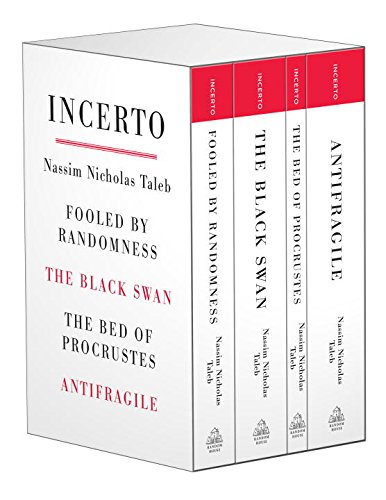


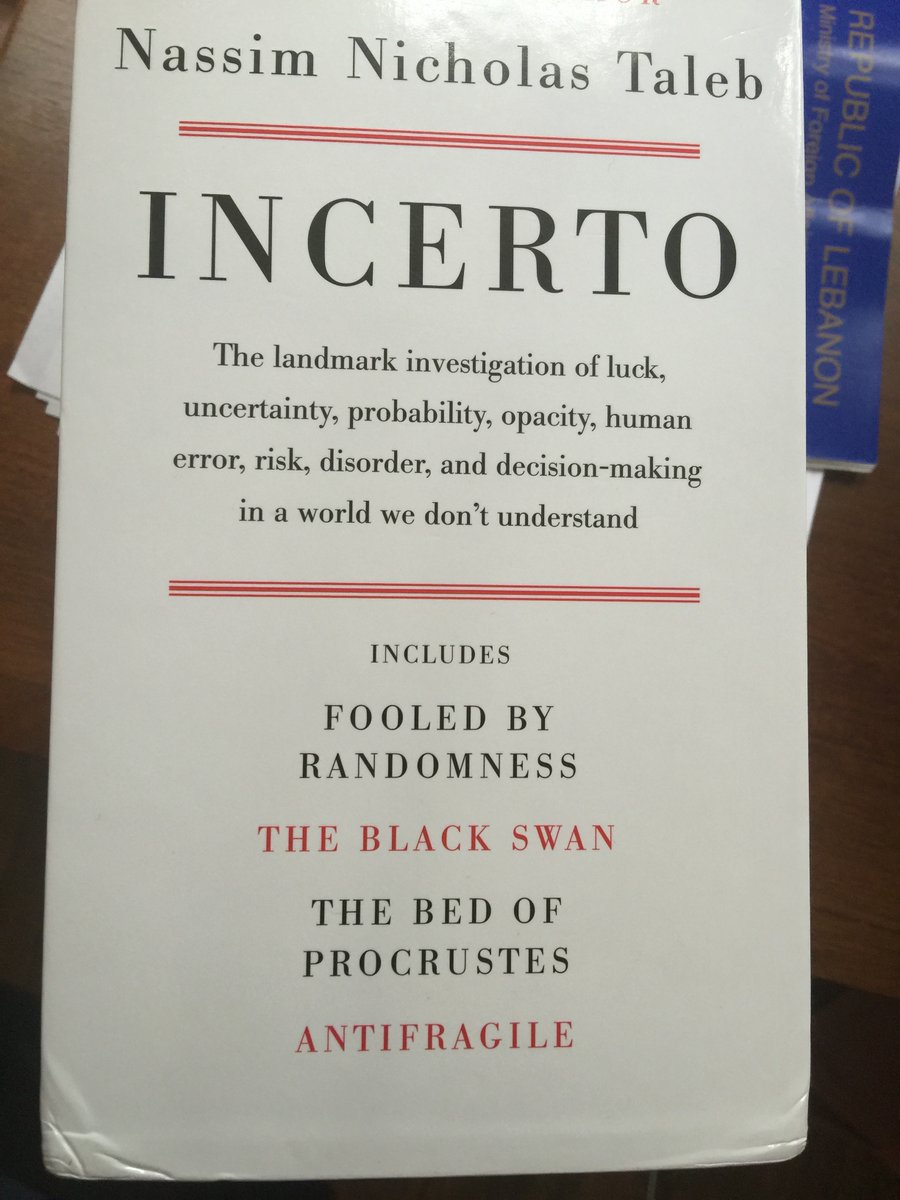
The Incerto finally became a single book.